

Virtual commissioning as an integral part of modern plant projects
Actual commissioning is one of the most critical phases in a plant project. Software, mechanics and processes are brought together for the first time under considerable time pressure. Changes are often identified too late, interfaces do not work properly and unclear responsibilities lead to delays. The result is expensive rework on the shop floor, which often comes too late.
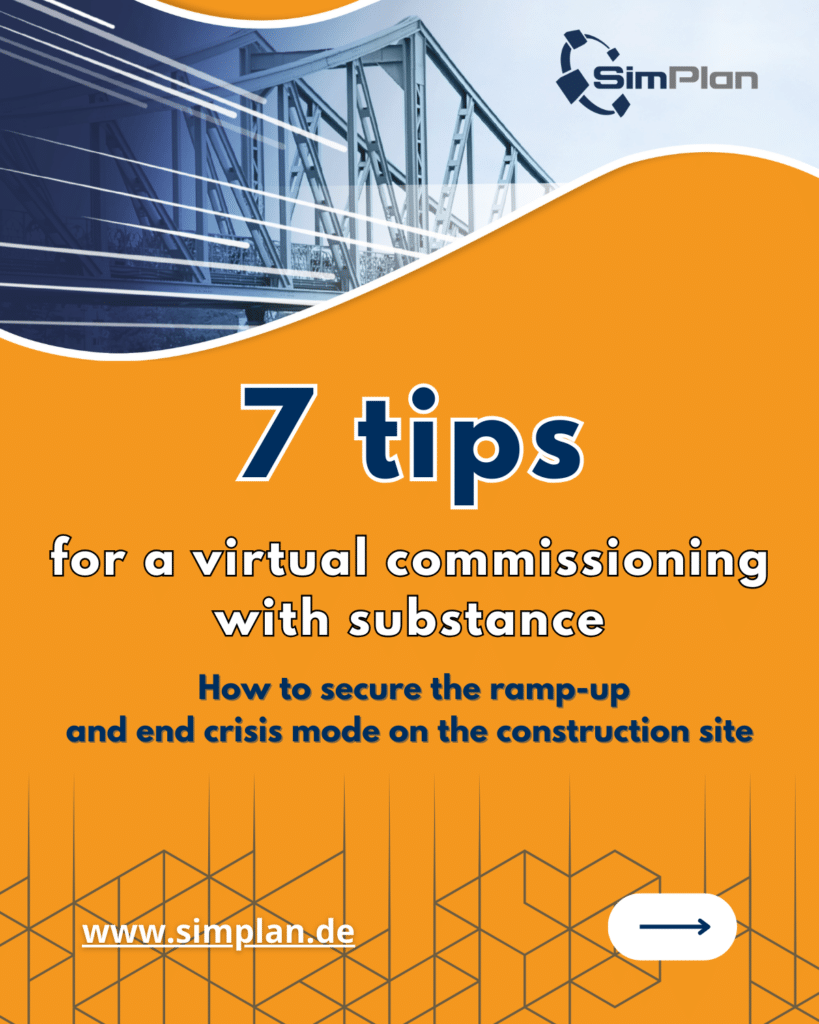
Virtual commissioning (VIBN) creates a structured test environment. It shifts error detection and coordination to a digital environment before real hardware is affected. However, for this to work, a few basic principles are crucial.
Emulation vs. virtual commissioning: the crucial difference
In practice, these terms are often used synonymously, but technically there is a clear distinction that is crucial for the success of the project:
- Emulation is a technical building block. It primarily tests the control system against simulated plant behaviour, with a focus on PLC logic and telegram exchange.
- Virtual commissioning (VIBN) is the structured overall process. It goes far beyond this and combines control, material flow, processes, scenarios and test organisation in a consistent overall model.
1. Early start beats late correction
VIBN only unfolds its full effect if it is planned early on in the project. If the model is only created shortly before the plant is set up, fundamental architectural issues remain unaddressed. The model and control system should be developed together from the outset in order to eliminate structural errors in logic, timing or plant design at an early stage.
2. Combining logic and material flow
Pure control emulation is not sufficient for a robust VIBN. Simulation and PLC are inseparable. Test not only movements, but also decision-making logic in the event of congestion, backlogs or blocked sensors. Only when real processes are tested instead of ideal scenarios can a meaningful picture of the system’s behaviour be obtained.
3. Have the courage to provoke a controlled crash
In real operation, malfunctions are inevitable. Downtime, borderline cases or operating errors are part of everyday life. It is precisely these situations that should be deliberately provoked in the digital model in order to check whether the control logic reacts robustly and an orderly restart is possible.
4. Clearly separate roles
VIBN is not purely an automation issue. Unclear responsibilities are one of the most common causes of delays. Create clear interfaces between automation, IT, planning and operations. A structured test organisation speeds up the cycles massively.
5. Data realism instead of estimation
The quality of the results depends largely on realistic parameters. Cycles, set-up times and sensor delays must correspond to reality. Even small deviations quickly add up to noticeable effects during operation.
6. Training without risk
The digital model is ideal for training purposes. Involve operators and maintenance staff at an early stage to increase routine and acceptance. Test typical operating procedures and fault situations under realistic conditions – without the pressure of ongoing production.
7. Don’t build a disposable model
The use of the model often ends when production starts. Instead, continue to use the digital twin for future optimisations, retrofits or changes. This allows effects to be analysed without jeopardising ongoing production.
Virtual commissioning as part of the overall system
VIBN reduces risks when it is not viewed in isolation, but rather connects control systems, processes, organisation and people in a common test environment. Using it early on and in a structured manner creates a solid foundation for a stable start to production.