

Planning complex logistics processes reliably and organising them efficiently
Modern logistics processes are characterised by their high dynamism and complexity. For instance, in the design process of an optimal transport and conveying system, sequencing and consolidation strategies also need to be taken into account. Therefore, simulation tools and methods are increasingly used in various planning phases of a logistics project.
Application areas for simulation range from feasibility studies very early in the planning process to Support during rough and detailed planning as well as in the realization and commissioning phase of the logistics system.Particularly in logistics projects, simulation technology can help to secure performance and decrease commissioning times, because with simulation, the interaction of all essential processes can be evaluated and optimised well ahead of time.
Standard modules increase efficiency
With shortening realization periods of logistics projects, simulation contributes to planning security and with that to the success of a project. The key factor for the effective application of simulation is quick and qualified modelling.
To ensure this, SimPlan consistently uses building block libraries and reference models, which include all conventional logistics elements and strategies used in this field of application.
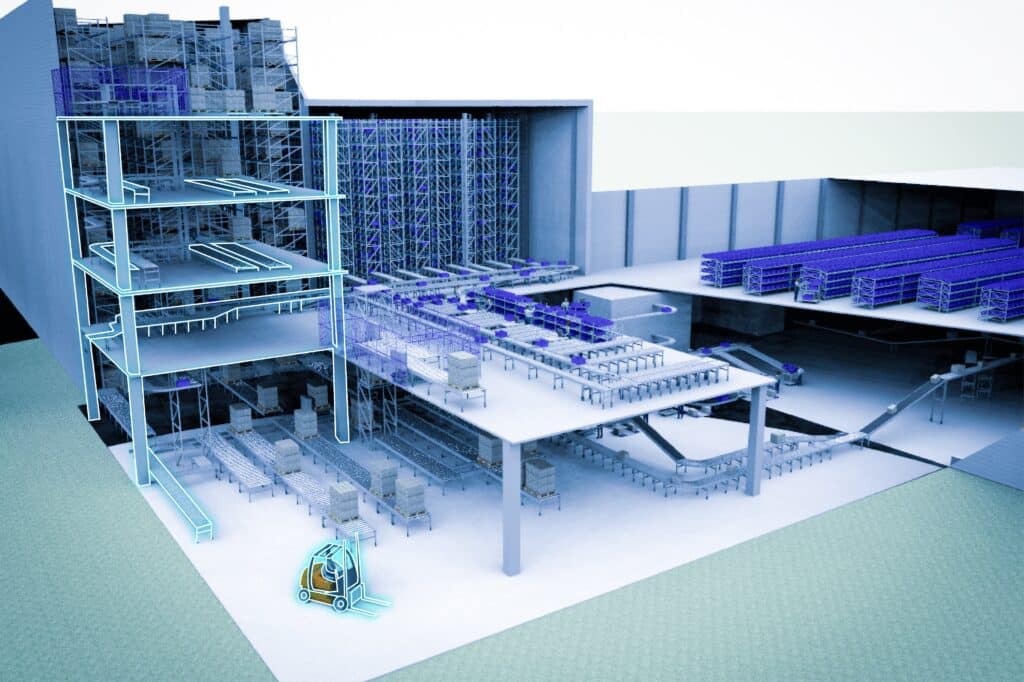
Additional tools support efficient modelling, as well as running and evaluating experiments. Database connections to collect planning, result and online data during the project are of course included, as are informative visualisations using 2D and 3D animation.
The consistent and largely tool-independent information management also contributes to the high clarity of the results. Already in a very early project phase, simulation runs show the influence of systems situated up- and downstream, like production, assembly, etc., on the overall system.
Using a modular structure, the simulation model can be quickly adapted to the latest planning state and therefore can play a vital role in the design and development of the logistics System.
Frequently Asked Questions
What are the benefits of simulation in distribution logistics?
Simulation enables logistics processes to be analysed at an early stage, bottlenecks to be identified and different scenarios to be compared. This helps to improve planning reliability and efficiency.
What can be simulated in distribution logistics?
Among other things, material flows, conveyor systems, warehouse processes, and sequencing and consolidation strategies can be simulated. This enables processes to be assessed and optimised holistically.
Which tools are suitable for material flow simulation?
Depending on the specific requirements, SimPlan utilises tools such as Plant Simulation, AnyLogic or Emulate3D. The choice depends on whether the focus is on internal material flows, complex distribution centres or integration with real-world control systems.