


Optimisation in the logistics control centre with the Dispo-Tool
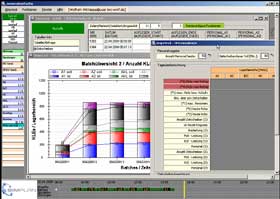
Introduction to the tool
The Dispo-Tool is a specialised control centre application designed to optimise picking and dispatch processes in logistics systems. The aim is to ensure an even workload across areas such as picking, consolidation and packaging, whilst simultaneously reducing throughput times.
In many logistics centres, orders are prioritised primarily according to dispatch times. This approach often leads to uneven load distribution and local bottlenecks. This is precisely where the Dispo-Tool comes in: it takes into account all relevant plant areas throughout the entire process and uses this information to calculate an optimised order sequence.
By combining real WMS data with simulation models, well-informed decisions can be made. At the same time, bottlenecks and weak points become visible at an early stage, without the need for time-consuming tests in live operation.
Areas of application and typical uses
The Dispo-Tool is primarily used in the following scenarios:
- Logistics centres with complex picking systems
- Distribution centres with high order volumes
- Facilities with multiple picking zones and downstream processes
- Control centres for the operational management of material flows
Typical use cases include:
- Optimisation of order release and start sequence
- Avoidance of bottlenecks in consolidation and packing areas
- Alignment of staff and facility capacities
- Simulation and evaluation of different scheduling strategies
Key functions and strengths
The Dispo-Tool plays a central role in the control centre and combines operational control with analytical evaluation:
Order management and sequence optimisation
- Transfer of approved picking orders from the WMS
- Calculation of an optimal start sequence for trays
- Feedback of the optimised sequence to the WMS
Staff scheduling
- Automatic and manual allocation of personnel resources
- Identification of bottleneck areas
- Creation of a daily performance profile
Analysis and visualisation
- Transparent display of the current order load
- Simulation of utilisation, throughput and buffer levels
- Forecasts for operating times and system behaviour
Flexibility and adaptability
- Batch formation for structured order processing
- Use of macros and SQL interfaces
- Rapid rescheduling in the event of changed conditions
A key advantage lies in the ability to discard existing schedules and recalculate them under changed parameters. This ensures the control centre remains responsive at all times.
Structure and available modules
The scheduling tool has a modular structure and can be expanded as required:
- Order module for managing and prioritising picking orders
- Scheduling module for sequence optimisation and batch formation
- Staffing module for planning and simulating resources
- Analysis module for evaluating key performance indicators
- Simulation interface for integration with external models
This structure enables a phased implementation as well as adaptation to existing IT landscapes.
Versions and licensing models
As the Dispo-Tool is a custom-developed solution from SimPlan, its specifications are project-specific:
- Adaptation to existing WMS and IT systems
- Extension depending on the complexity of the plant
- Licensing as part of an overall project or as a standalone control centre solution
The exact configuration is usually determined on the basis of the respective requirements and objectives.
Integration and interfaces
A key component of the Dispo-Tool is its integration into existing systems:
- Connection to WMS for the transfer and return of orders
- Use of real operational data for simulation and optimisation
- SQL interfaces for customised evaluations and extensions
- Integration with simulation models for scenario analysis
The close integration with operational systems enables the calculated optimisations to be implemented directly during ongoing operations.
Frequently Asked Questions (FAQ)
Who is the Dispo-Tool suitable for?
For companies with complex logistics processes that wish to improve their order management and resource utilisation.
What data is required?
Typically data from the WMS, such as order information, lead times and plant parameters.
Is a simulation model essential?
A simulation model is recommended to realise the full benefits, as it enables well-founded optimisations and scenario analyses.
Can the tool be integrated into existing systems?
Yes, integration into existing IT and control centre systems is a key component.
Manufacturer / Availability
The Dispo-Tool is developed by SimPlan Integrations GmbH and implemented on a project-specific basis. As a provider with many years of experience in simulation, emulation and logistics optimisation, SimPlan supports companies from analysis through to implementation.
A real-world example is the logistics centre of WMF AG, where a simulation model was created, optimisation strategies developed and the Dispo-Tool successfully integrated into the control centre (see flyer).