


SimPath: Visualising and analysing material flows
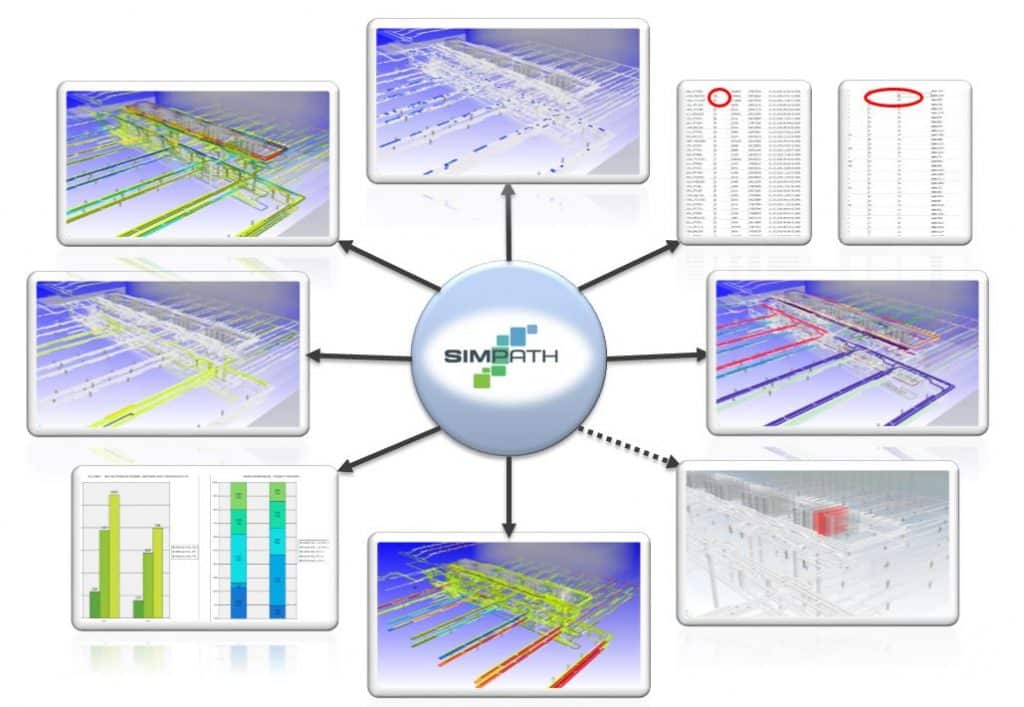
SimPath is a simulation library for the detailed analysis, visualisation and evaluation of material flows in production and logistics systems. Whilst simulation and emulation are frequently used for planning new facilities, SimPath also supports the continuous analysis of existing systems.
Highly automated production and logistics facilities, in particular, generate large volumes of material flow data. SimPath helps to present this data in a comprehensible manner, visualise material flows transparently and provide key performance indicators for operation, analysis and optimisation.
Areas of application and typical uses
SimPath is suitable for companies wishing to monitor, analyse and optimise material flows in existing facilities. The library can be used for both real operational data and simulation and planning data.
Typical areas of application include:
- Analysis of material flows in production and logistics systems
- Visualisation of complex transport and routing processes
- Investigation of bottlenecks and detours
- Evaluation of material flows between individual plant areas
- Support for process mining projects
- Comparison of planning, simulation and real-world data
Thanks to the unified database, companies can better understand their processes and identify optimisation potential more quickly.
Key functions and strengths
The SimPath Library enables the construction and visualisation of conveyor technology and material flow systems in a 3D environment. At the same time, large volumes of data can be efficiently processed and analysed.
Key functions include:
- Sankey: Visualisation of absolute volume flows on an hourly basis
- Routing: Visualisation of routing and representation of the time taken between two reporting points
- Cycles: Visualisation of the loop factor on an hourly basis
- Replay: Visualisation of deviating execution and selection of specific group controls
- Statistics: Visualisation of material flows to and from selected reporting points, separated by source and destination
- Exceptions: Analysis of areas and transport units with segment jumps
Process mining in the material flow of highly automated logistics systems
You are currently viewing a placeholder content from YouTube. To access the actual content, click the button below. Please note that doing so will share data with third-party providers.
More InformationStructure and technical fundamentals
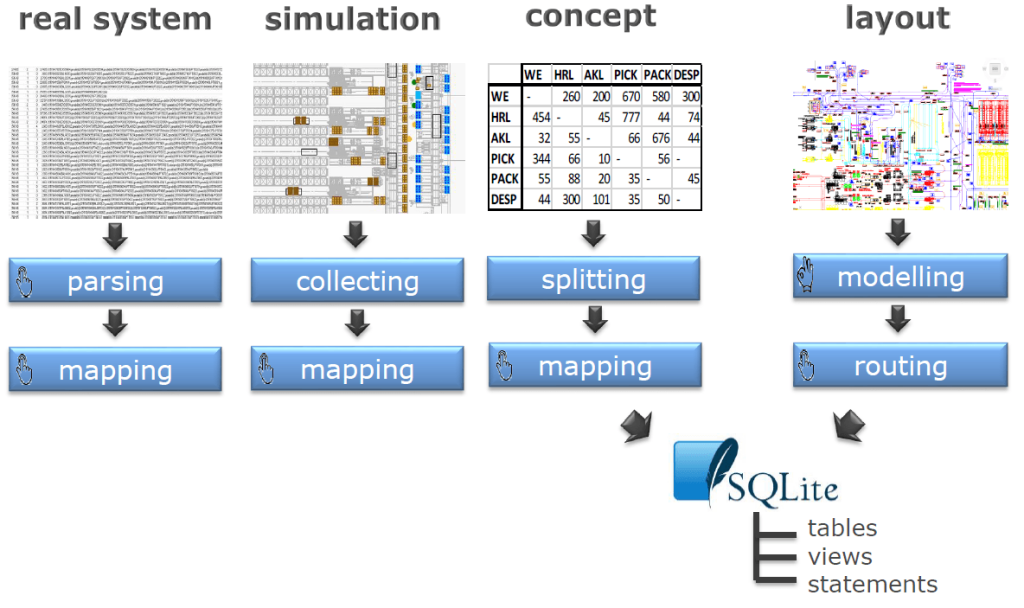
SimPath is based on a powerful data management system using SQLite in-memory databases. This enables even large volumes of data to be analysed at high processing speeds.
The library supports the design of complex material handling systems in 3D and offers standardised interfaces for integrating project-specific requirements. Existing data sources can be efficiently integrated and expanded.
Thanks to its modular structure, SimPath can be flexibly adapted to different use cases.
Integration and Interfaces
A particular advantage of SimPath is the use of various data sources within a shared analysis environment.
The library supports:
- Analysis of real-time and historical operational data
- Connection to simulation models
- Use of data collector objects within simulation projects
- Mapping of material flow concepts from the planning phase onto real plant structures
- Integration of project-specific data and evaluations
This enables companies to compare and evaluate planning data, simulation models and real operational data.
Process mining for material flows
With SimPath, process mining methods can be applied to material flow processes. The movements of transport units can be tracked, analysed and visualised. This makes actual process flows visible and allows deviations from defined target processes to be identified.
Particularly in highly automated logistics systems, this creates a valuable basis for continuous improvement processes and data-driven decisions.
Frequently asked questions about SimPath
Which systems is SimPath suitable for?
SimPath was developed specifically for production, conveyor technology and logistics systems in which large volumes of material flow data are generated.
Can simulation data also be analysed?
Yes. SimPath can analyse and visualise both real-world data and data from simulation models.
What are the benefits of visualising material flows?
Complex interrelationships become easier to understand. Bottlenecks, detours or unusual process sequences can be identified and assessed more quickly.
Manufacturer and availability
SimPath was developed by SimPlan and is used in projects for the analysis, visualisation and optimisation of material flows. The library can be used for both existing plants and for simulation and planning projects.
The SimPlan team is happy to assist you with further information on possible applications, integration and individual requirements.