

LOG.NET 2026: Digital planning and simulation for resilient defence logistics
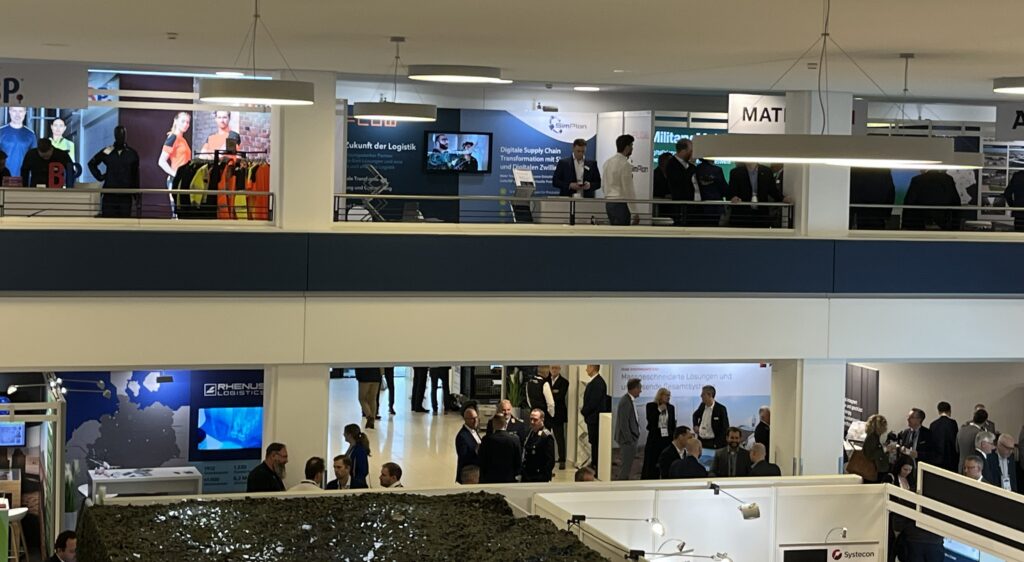
LOG.NET 2026 took place in Koblenz on 11 and 12 February 2026. The event brought together representatives of the German Armed Forces, suppliers and planning experts from the logistics sector. The focus was on current challenges and solutions for developing efficient and resilient supply chains in the defence sector.
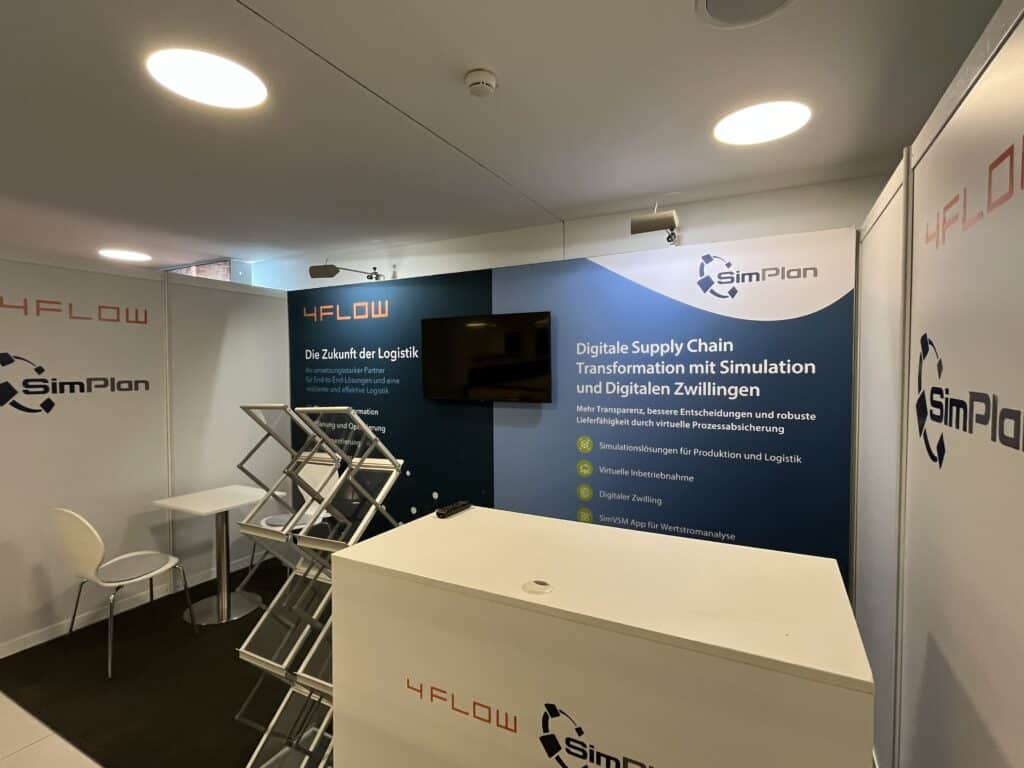
SimPlan shared a stand with 4flow and presented approaches to end-to-end digital planning as well as the use of simulation and digital twins.
Joint presentation: Digital end-to-end planning
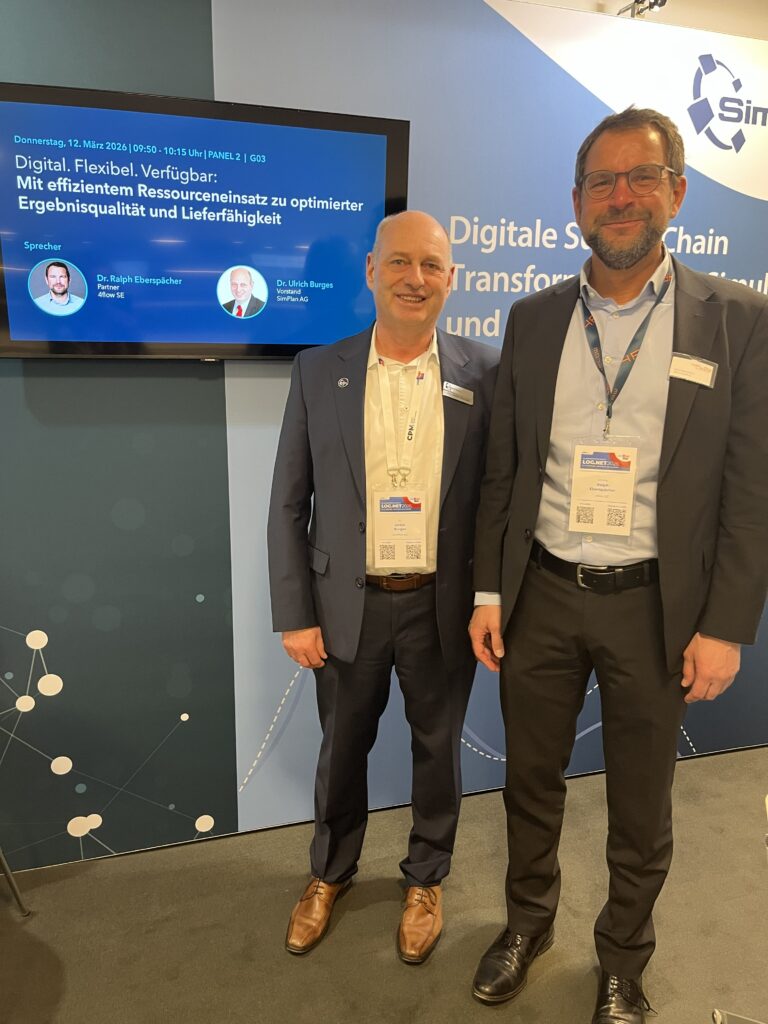
A key highlight of the programme was the joint presentation by Dr Ulrich Burges, SimPlan AG (pictured left) and Dr Ralph Eberspaecher, 4Flow, entitled:
“Digital. Flexible. Available. Optimised result quality and delivery capability through efficient resource utilisation”.
The focus was on the question of how logistics systems can be efficiently planned, evaluated and implemented in the face of increasing demands. In particular, the importance of end-to-end digital planning was emphasised. The scope of planning considered included:
- Network planning and site selection
- Detailed planning of logistics systems
- Support during the construction phase
- Implementation and commissioning
Various established methods and tools were applied:
- Network analysis for strategic design
- Risk analysis to assess uncertainties
- Layout planning for efficient space and process design
- Material flow simulation to validate performance and robustness
- Virtual commissioning for early validation of complex systems
The combination of these approaches makes it possible to validate planning decisions at an early stage, reduce risks and significantly shorten implementation times.
Practical requirements: scalability, flexibility, resilience
During the event, numerous discussions were held with suppliers to the Bundeswehr. It became clear that the demands placed on production and logistics systems are currently rising sharply.
Many companies are faced with the task of:
- Increasing production capacities at short notice
- Expanding maintenance services
- Building up additional logistical capabilities
At the same time, the systems must be designed in such a way that they remain adaptable in the long term. Key requirements are therefore:
- Scalability for rapid expansion of capacities
- Flexibility in dealing with changing conditions
- Resilience against disruptions and uncertainties
Digital planning methods, simulation and digital twins play a decisive role here, as they enable well-founded decisions to be made under conditions of uncertainty.
Logistics Command dialogue format: Cooperation in logistics
Following LOG.NET, the dialogue format ‘Future Orientation – Cooperation in Logistics’ took place, organised by the Bundeswehr Logistics Command. During this event:
- additional logistical requirements of the Bundeswehr were presented
- requirements for future capability were specified
- ways of collaborating with industry partners were highlighted
Particular focus was placed on the framework conditions for cooperation, including regulatory requirements, tendering procedures and procurement processes, as well as aspects of confidentiality and organisational and procedural workflows. For companies, this offers clearly structured access to future projects in the defence sector; at the same time, however, the requirements for planning certainty, traceability and compliance are increasing.
LOG.NET 2026 demonstrated that the development of efficient defence logistics increasingly requires integrated, digital planning.
By combining network analysis, simulation and virtual commissioning, complex systems can be assessed at an early stage and designed to meet specific requirements. This lays the foundation for meeting the growing demands for availability, adaptability and efficiency.