

You can download the sample models from the page www.krankenhaussimulation.de/dashboardsimulation.
Please feel free to contact us if you have any questions about our sample models or about hospital simulation in general. We’d also be happy to arrange an online meeting to explain the details to you or discuss other potential use cases.
Healthcare: How a freely available simulation model makes hospital processes visible
SimPlan, in collaboration with the ENDERA Group, has developed simulation solutions for hospitals. This has resulted in a prototype simulation model that is available to hospitals free of charge. Users can input their own hospital parameters into the model and directly experience how these affect key process metrics relating to space and staffing.
Starting point: The effects of hospital parameters are difficult to grasp
Hospitals often plan space and staffing based on experience, as the interactions between individual variables are difficult to assess. For example, how does a change in staffing levels affect waiting times in the A&E department, or how does a different layout alter workflows in the elective care centre? These questions can only be answered to a limited extent based on experience alone, which is why SimPlan and the ENDERA Group came up with the idea of building a model that makes these interrelationships tangible.
Objective: Making process impacts tangible
The aim was to create a model that not only depicts a single hospital scenario but can also be applied to different hospitals. Users should be able to set their own parameters and see directly what impact this has on space and staffing, without having to build their own simulation model. The focus was on two key hospital areas:
- The Central A&E Department (ZNA) with ambulatory and non-ambulatory patients
- The Elective Centre (EZ) for outpatient and pre- or post-hospitalisation treatments
Solution: Two generic models for the Central A&E and the Elective Centre
SimPlan developed two generic simulation models based on typical hospital structures.
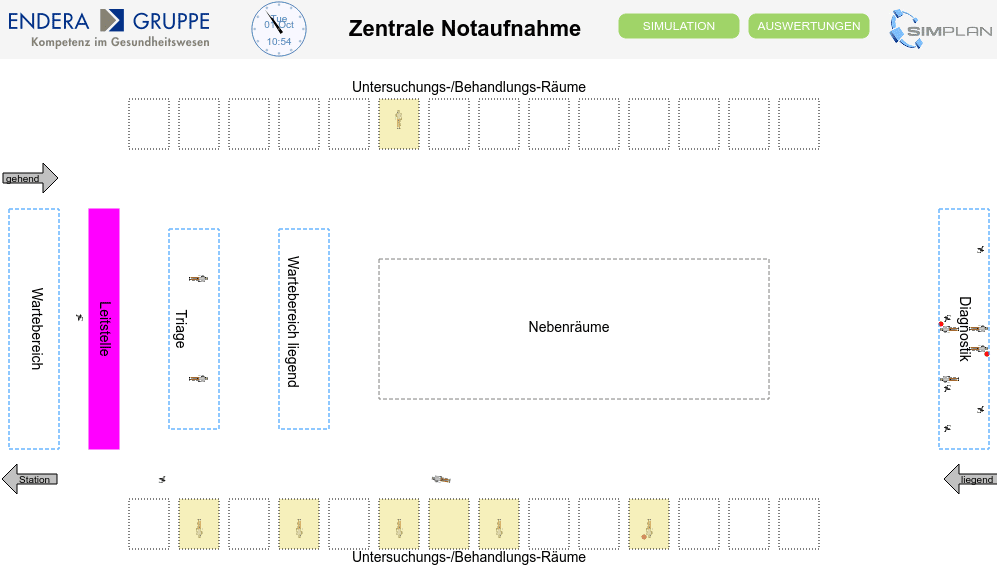
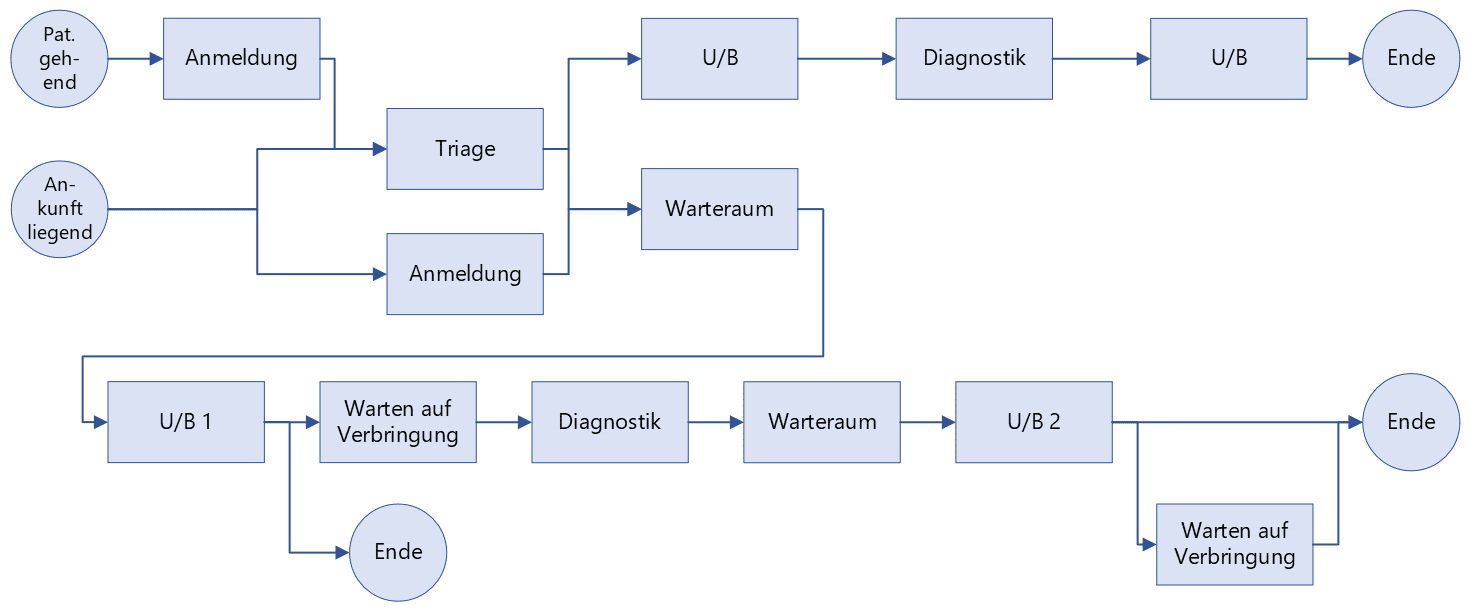
The model for the Central A&E depicts pure emergency operations. It covers both ambulatory and non-ambulatory patients. The central function of the A&E department is to determine as quickly as possible whether inpatient admission is necessary or whether outpatient treatment is sufficient. The model illustrates how changes to parameters affect precisely this process.
More detailed information and instructions are available here.
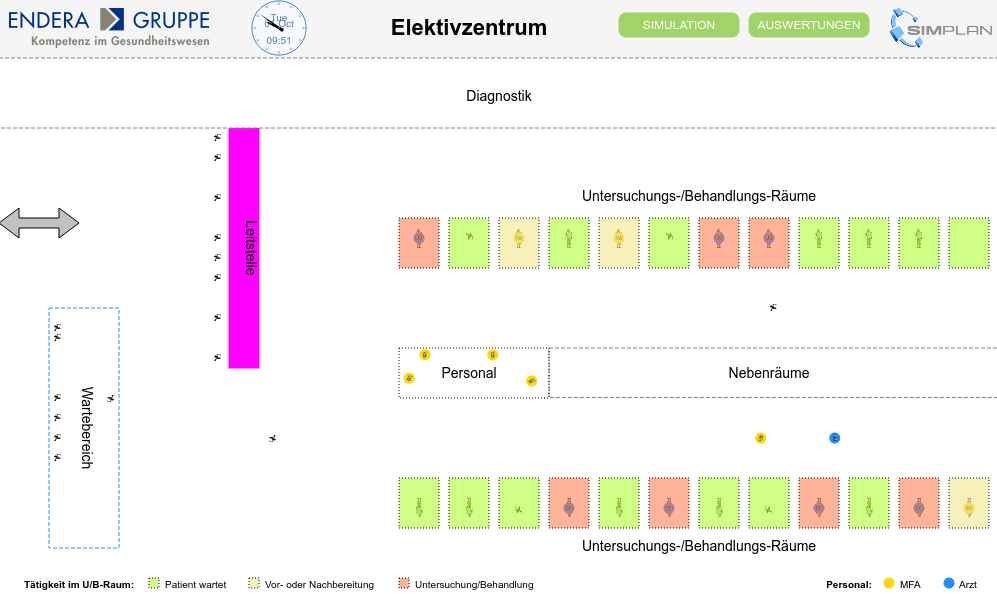
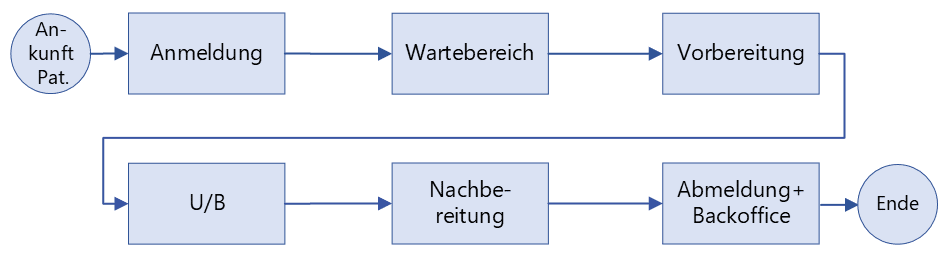
The model for the Elective Centre, on the other hand, simulates planned, non-acute treatment pathways. It covers the following patient groups:
- Outpatient follow-up care
- Pre- and post-admission care
- The pre-medication consultation
More detailed information and instructions are available here. Both models are available free of charge to interested hospitals at www.krankenhaussimulation.de. This enables managers to run through their own scenarios without having to build a simulation model themselves.
Results: A freely available tool to try out
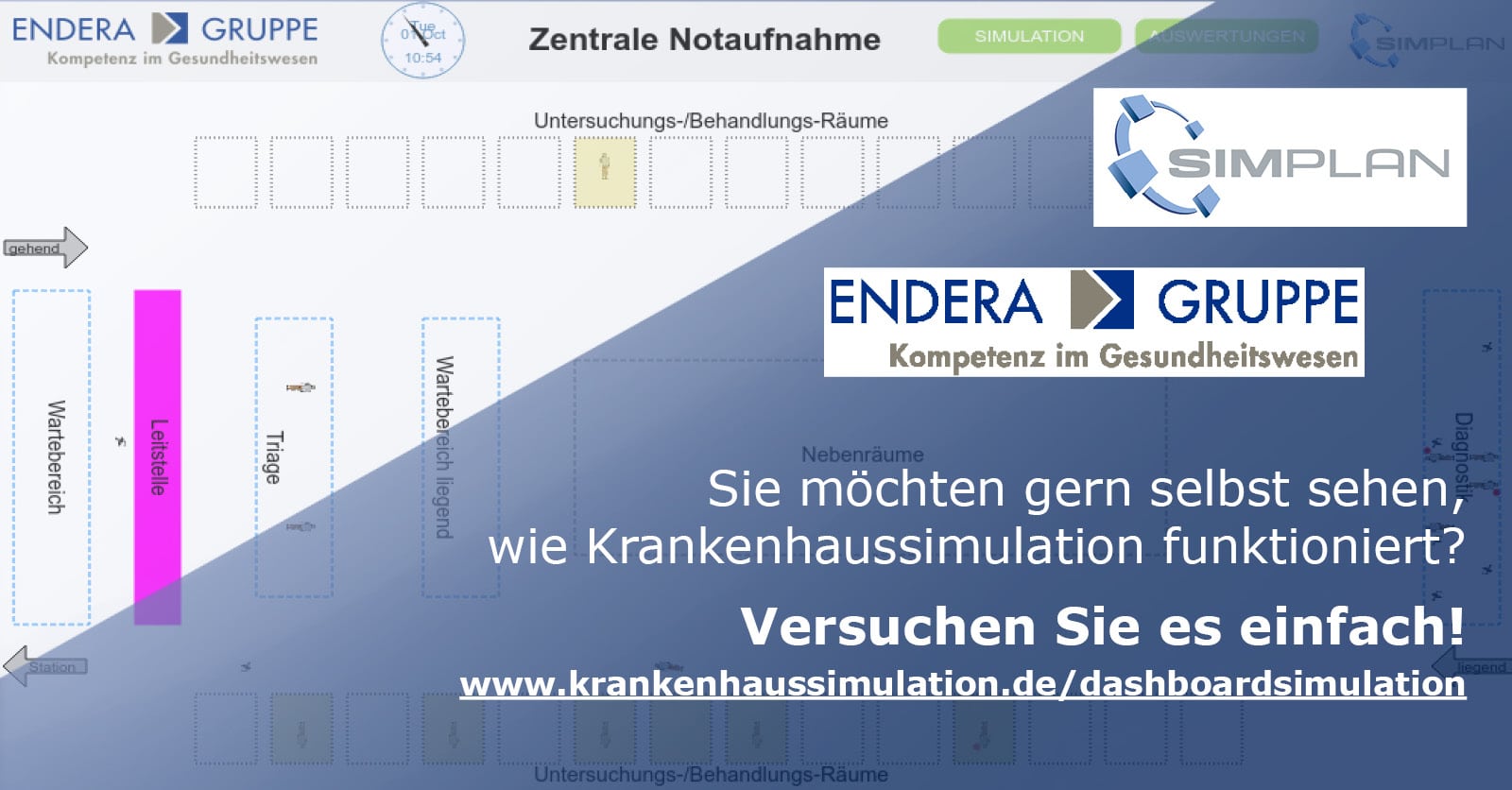
The outcome of the project is a freely accessible tool that hospitals can try out for themselves. Those interested can find the models at www.krankenhaussimulation.de/dashboardsimulation and can also arrange an online meeting with SimPlan to clarify any outstanding questions directly.
Simulation as a gateway to data-driven hospital planning
The project demonstrates how simulation can be utilised beyond the scope of a single client project – namely as a freely accessible tool for an entire sector. Because hospitals can use it to set their own parameters and see the effects immediately, the barrier to engaging with simulation in the first place is lowered. Particularly in the healthcare sector, where space and staff are in short supply and costly, such a model helps to base decisions more on data rather than on experience alone.