

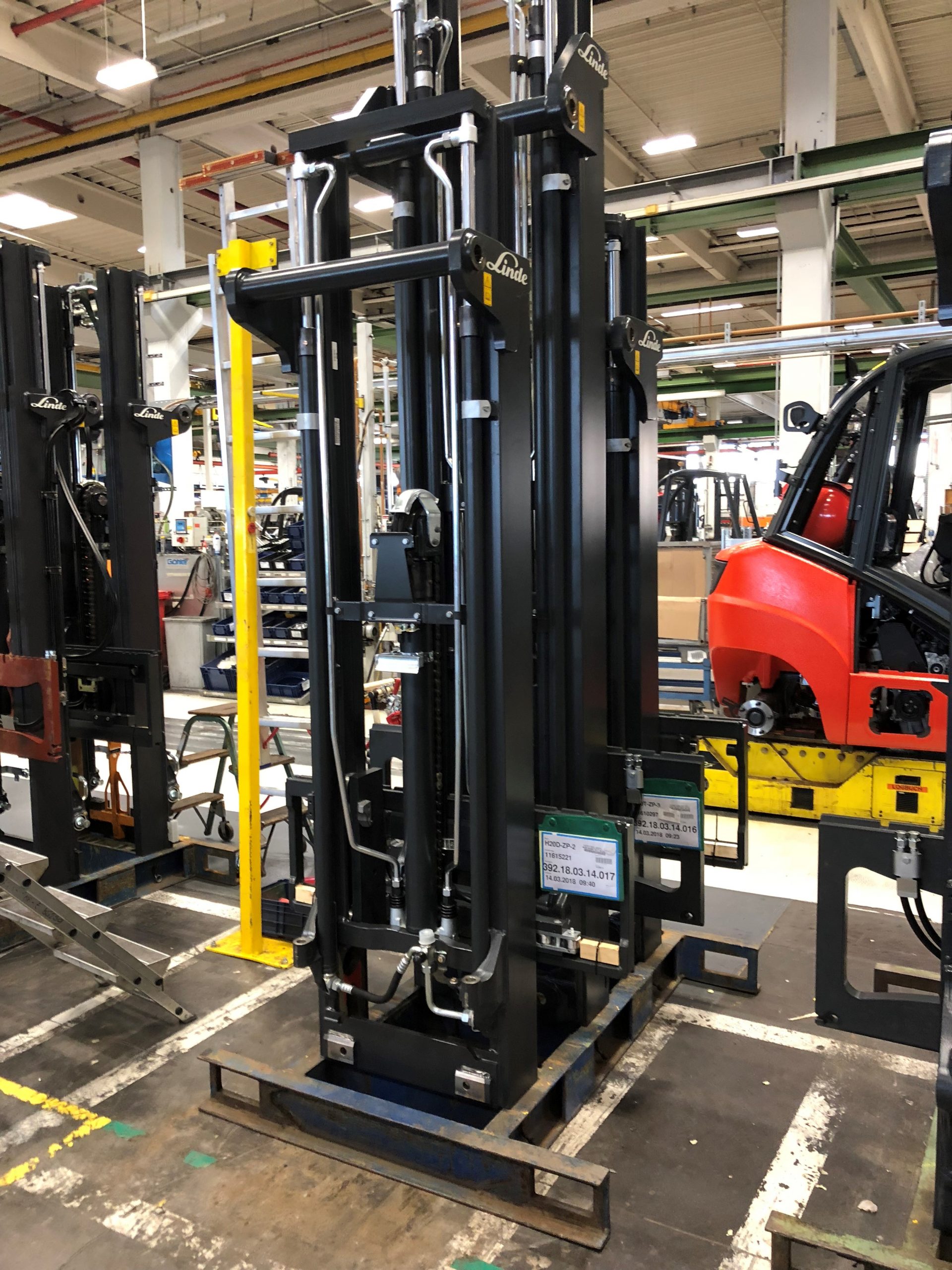
Linde: More flexible control of the production and assembly of lift masts for forklift trucks
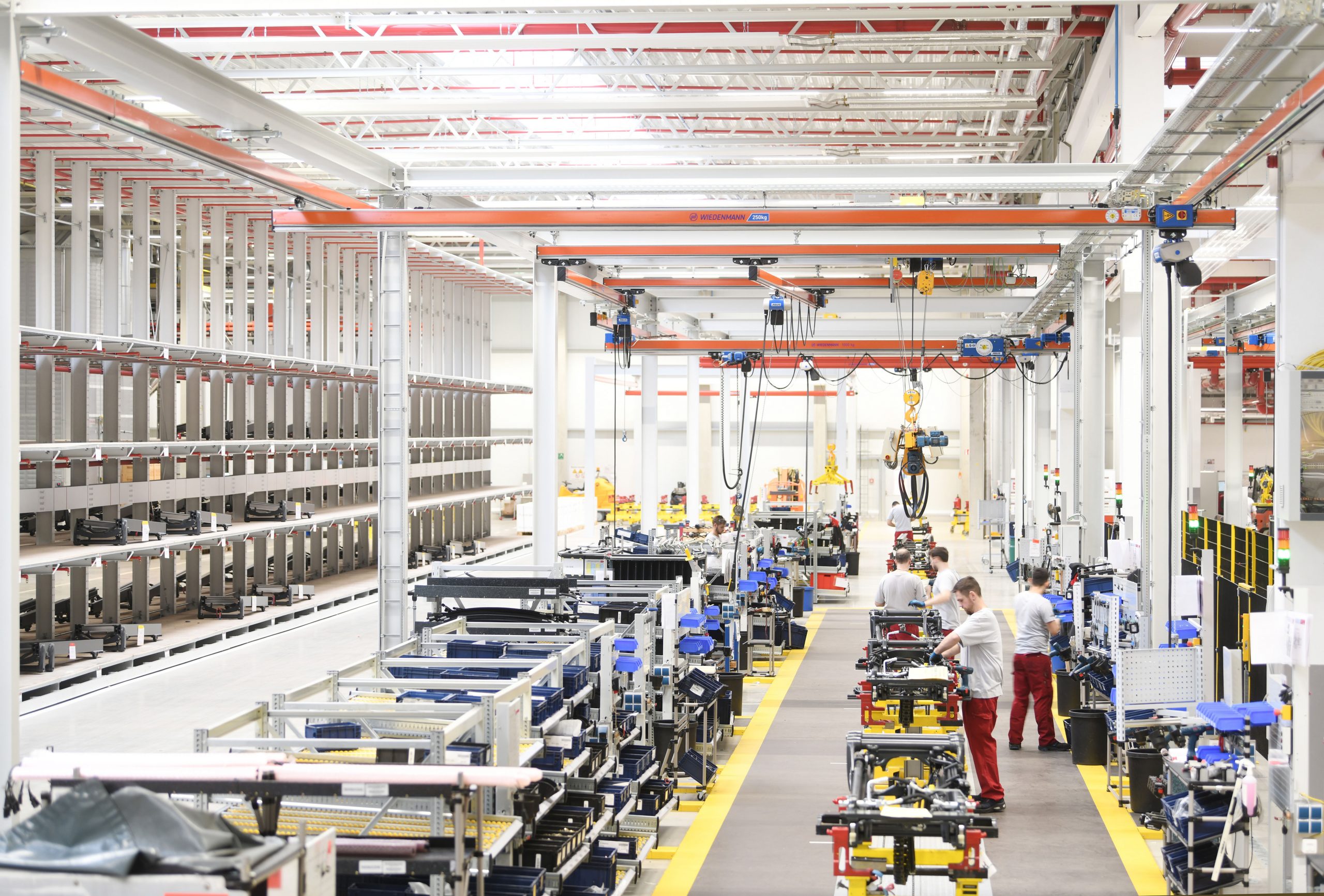
At its Aschaffenburg site, Linde manufactures, amongst other things, lift masts for forklift trucks. A lift mast consists of up to three mast frames and undergoes several manufacturing stages before proceeding to final assembly: the mechanical manufacture of the individual components, painting and mast assembly. As the assembly process was reorganised and new forklift models were introduced, Linde also had to adapt the upstream manufacturing process.
Initial situation: New forklift models change the requirements for manufacturing
The reorganisation of the assembly process and the introduction of new forklift types also had an impact on the mechanical production of lift masts. This raised the question of where bottlenecks lie within this process and how production orders can be scheduled in such a way that set-up times and buffer stocks are kept to a minimum. Linde therefore opted for a simulation model that maps the entire process from mechanical production through to final assembly.
Objective: Identify bottlenecks and determine buffer sizes
The simulation was intended to answer specific questions regarding production and control. The focus was on the following objectives:
- Identify bottlenecks in the mechanical mast production
- Optimise batch sizes and order sequences to reduce set-up times
- Determine the required size of the sequencing buffer prior to assembly
Solution: Simulation model using Tecnomatix Plant Simulation
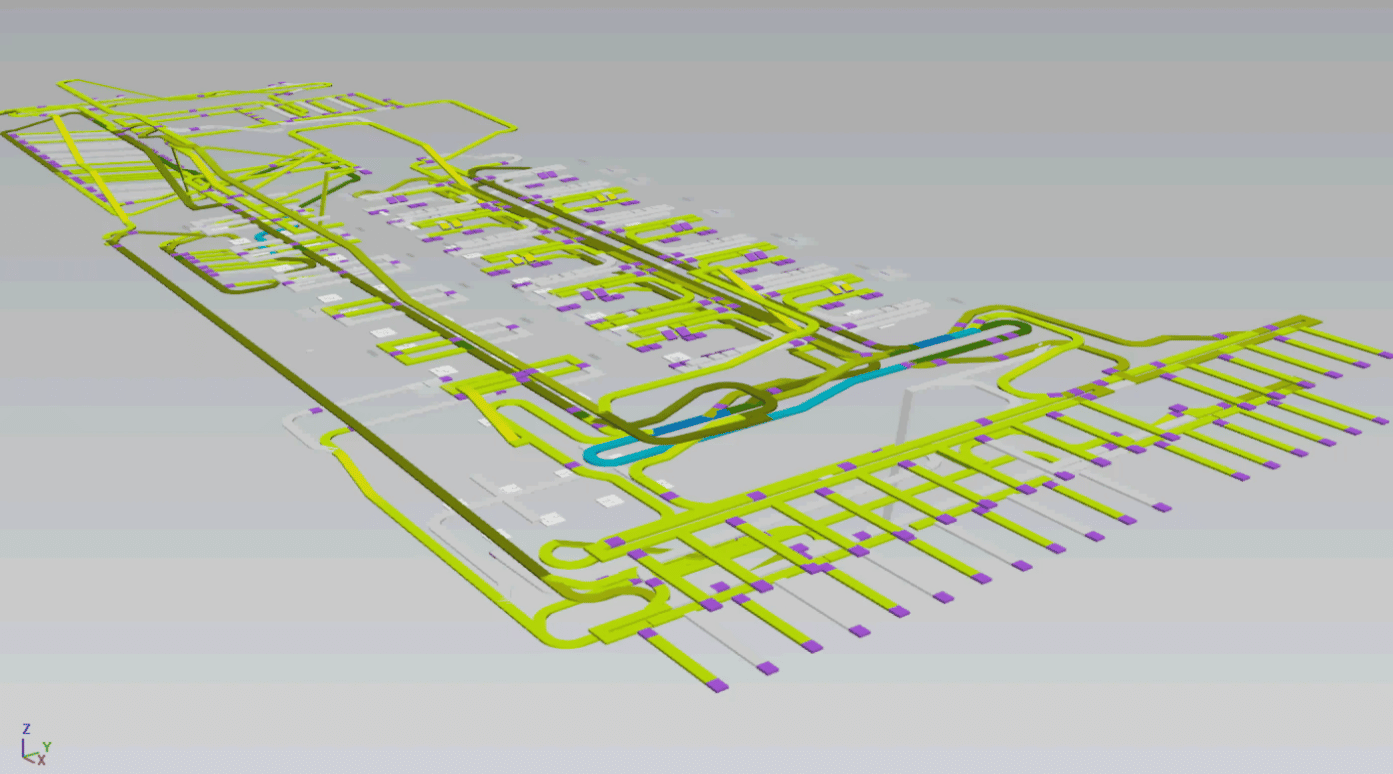
Using the standard simulation tool Plant Simulation, SimPlan built a model that maps the entire process, from the mechanical production of lift masts through painting and mast assembly to final assembly. As reliable results require real-world conditions, the model utilised actual data directly from production and also modelled complex set-up operations.
On this basis, SimPlan tested various scheduling strategies for production orders and compared them with one another:
- sequence-accurate scheduling, in which orders enter production in the specified order
- lot-size-optimised scheduling, which reduces set-up operations through clever grouping
In addition, the model examined how automated welding cells and more flexible utilisation of workstations affect the overall process.
Results: Shorter set-up times and a smoother process
The simulation demonstrated which scheduling strategy significantly reduces work-in-process stock and set-up times, thereby providing a robust recommendation for order management. Furthermore, the optimised strategy smoothed out peaks in production utilisation, as orders were distributed more evenly across the workstations.
The model also yielded two key insights: the scheduling of production orders must take actual capacity constraints into account; otherwise, bottlenecks will simply shift to another point in the process. Furthermore, increasing the flexibility of the welding lines has a positive effect on the entire workflow, as it accommodates short-term shifts between workstations.
Simulation as an early warning system for changing product mixes
This case study demonstrates how quickly changes in assembly can affect upstream production stages. New product variants not only alter the end product but also affect cycle times, set-up times and buffer requirements further upstream in the process.
By simulating such shifts in advance, it is possible to identify bottlenecks before they cause delays in actual production and to adjust order management accordingly. This applies to manufacturers of industrial trucks as well as to other production facilities with multi-stage manufacturing processes and changing product variants.