

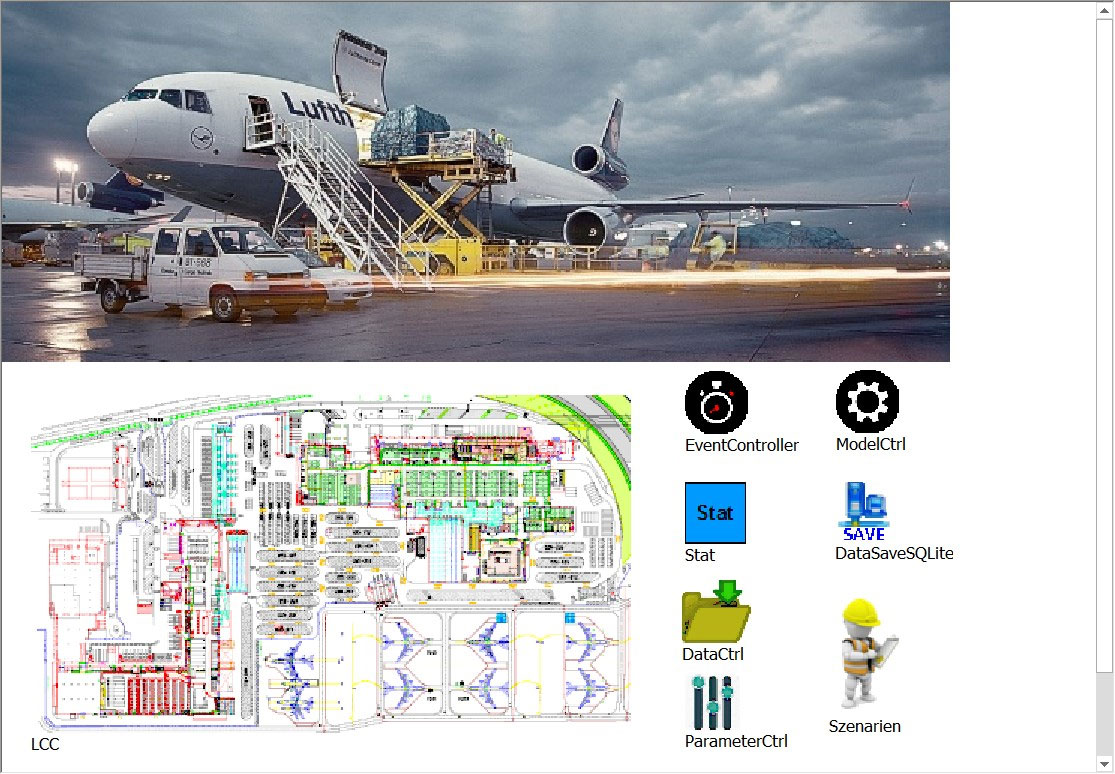
Air freight: How a simulation safeguards ongoing terminal operations during the refurbishment
Software: Plant Simulation
Lufthansa Cargo operates one of Europe’s largest cargo terminals at Frankfurt Airport. The covered area spans 110,000 square metres, plus adjacent yard areas for handling and clearance. As a terminal of this size never stands still, Lufthansa Cargo had to carry out the planned restructuring whilst operations continued. To tackle this task, the company brought SimPlan on board as its simulation partner.
Initial situation: Planning a refurbishment without interrupting operations
A cargo terminal of this scale cannot simply be shut down and rebuilt, as freight must continue to arrive, be handled and transported onwards without interruption. Lufthansa Cargo was therefore faced with the challenge of planning far-reaching structural changes without jeopardising day-to-day operations. This involved both structural alterations and adjustments to material flow and process organisation. Without a robust model of the terminal, it remained unclear which measures should be implemented first and how individual steps would affect ongoing operations.
Objective: Underpinning decisions for one of Europe’s largest terminals
SimPlan was tasked with developing a tool to support Lufthansa Cargo in addressing several issues simultaneously. The focus was on the following points:
- Developing a viable restructuring strategy for the terminal
- Prioritise individual measures effectively
- Underpin strategic decisions with reliable data
- Assess the impact of refurbishment stages on day-to-day operations
- Allocate resources according to need
As these issues are closely interlinked, a mere process description was not sufficient. Lufthansa Cargo needed a model that could simulate scenarios before they were implemented in reality.
Solution: Simulation model using Plant Simulation with Excel integration
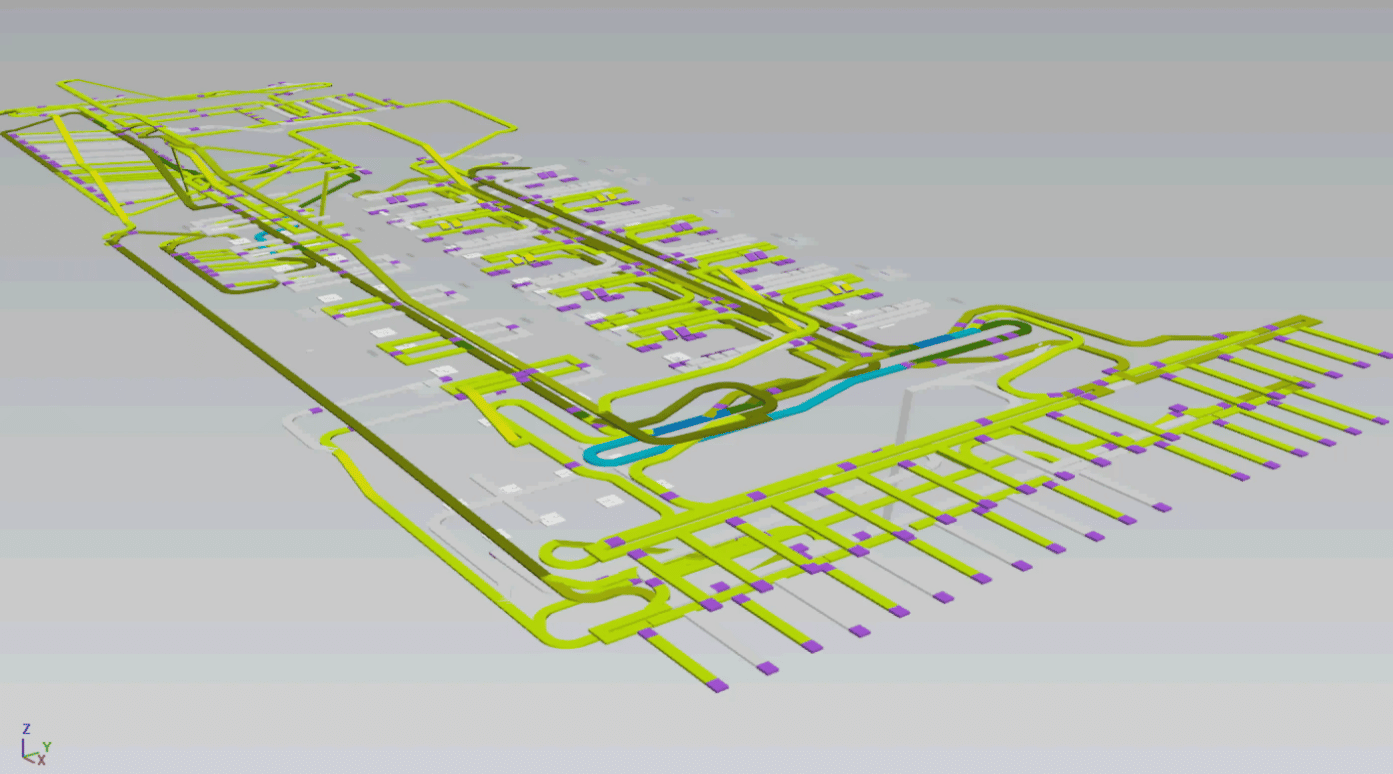
SimPlan developed a simulation model of the terminal using Plant Simulation. The model flexibly maps all relevant terminal areas and can be controlled via Excel or linked databases. This enables Lufthansa Cargo to parameterise resource utilisation and space allocation without having to adjust the model itself.
The solution covers two key areas:
- Realistic process modelling: flexible representation of all terminal areas, parameterisable resource utilisation and control via Excel or databases
- Decision support: simulation of future structural measures and the reorganisation of material flows and processes
In addition, SimPlan designed the model so that storage areas can be flexibly parameterised and time periods and scenarios can be defined directly via the Excel interface. This enables Lufthansa Cargo to independently run through new scenarios even after the project has been completed.
Results: High degree of correlation between simulation and reality
Validation of the model revealed a high degree of correlation between the simulation and actual operations. To this end, SimPlan compared the following key performance indicators, amongst others:
- Tonnage per area
- Transit times
- Resource and space utilisation
- Cargo quality
- Distances travelled
- Value-added share per cargo item
When comparing the ‘as-is’ simulation with reality, the key performance indicators matched to 99 per cent. Because the simulation was so closely aligned with reality, Lufthansa Cargo was able to rely on the model for further decision-making. The model also immediately identified initial opportunities for optimisation within the terminal. Management has been using the tool continuously ever since to make strategic restructuring decisions based on concrete key performance indicators rather than on assumptions.
Simulation as a long-term management tool for complex logistics sites
The project demonstrates how important a robust process model becomes as soon as a site cannot afford to stand still. In air freight logistics in particular, tight time constraints, high space utilisation and round-the-clock operations all converge, which is why decisions on refurbishment can hardly be based on experience alone.
A simulation model makes the effects of individual measures visible before they are implemented and, moreover, remains a useful tool for addressing future issues. For companies with similarly complex sites, the project thus provides an example of how simulation can transform a one-off analysis into a long-term management tool.