

Peiner Träger GmbH uses simulation to optimise scrap logistics
Peiner Träger GmbH, a subsidiary of Salzgitter AG, has a history of more than 140 years in steel production and supplies a comprehensive range of beam and column sections for the construction industry. As part of measures to improve efficiency, the company hoped to achieve cost savings in scrap logistics with the help of a simulation.
Initial situation: Optimising rail logistics for scrap delivery
The task involved:
- Optimising rail logistics for scrap delivery to a steelworks
- Reducing the number of wagons by minimising rolling stock
- Identifying potential savings through the consolidation of scrap grades
Objective: Identify cost drivers, correctly dimension stock levels
The aim was to identify cost drivers, validate concepts for reducing costs, determine the appropriate level of stock on the tracks and reduce turnaround times.
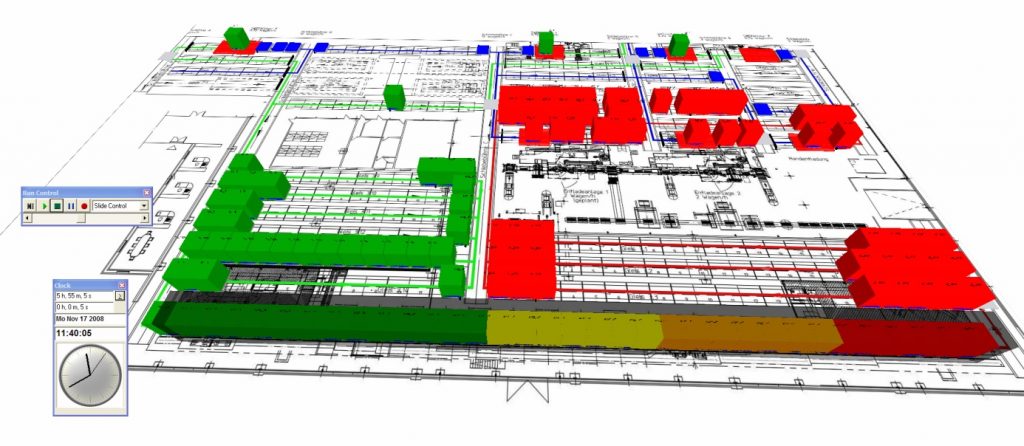
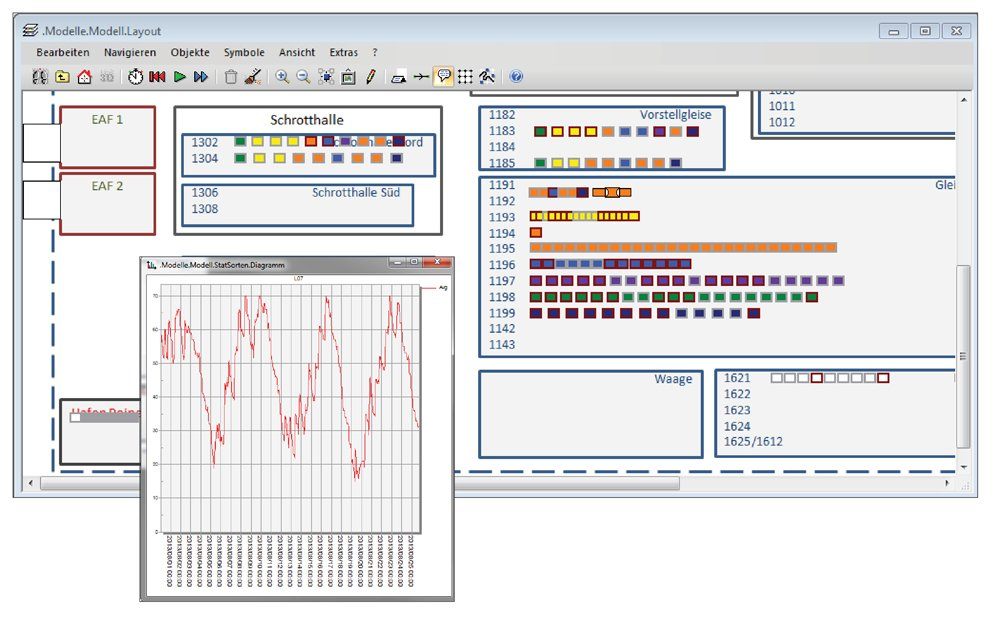
Solution: Simulation of rail infrastructure and shunting teams
The simulation model mapped the following areas:
- Rail infrastructure
- Activity profiles of the shunting teams
- Compilation of activities using activity building blocks
- Scheduling of scrap wagons at the sources
In addition, scenarios could be imported and exported to test different concepts against one another.
Results: Working time models evaluated, dispatching rules optimised
The simulation enabled the evaluation of various working time models in relation to stock levels and visualised the key cost drivers. Building on this, dispatching and shunting rules were optimised.
Simulation reveals cost drivers in scrap logistics
The case study demonstrates how a simulation in rail logistics not only reduces stock levels and turnaround times, but also highlights the factors that actually drive costs.