

Electronic components: Greater transparency for a growing logistics system
Würth Elektronik eiSos is one of Europe’s leading manufacturers of electronic and electromechanical components. At its logistics site in Waldenburg, the company is already using a SimPath model to visualise and analyse the material flow within its facility. When the logistics system was expanded, this model also had to be scaled up.
Initial situation: An existing model needs more depth
The facility in Waldenburg was already collecting extensive data from counting points. Although this data could be analysed, it remained largely abstract; without suitable visualisation, it did not show where the material flow was actually stalling or where there was potential for improvement. Würth Elektronik eiSos was therefore already using the SimPath tool, but wanted to adapt the model to the expanded facility.
Objective: To integrate new plant areas into the model
The expansion of the logistics system resulted in the addition of new plant areas. This presented the challenge of extending the existing SimPath model so that it maps the entire new material flow and enables deeper insights into the processes, rather than merely showing a section of the plant.
Solution: SimPath model expanded to include new areas
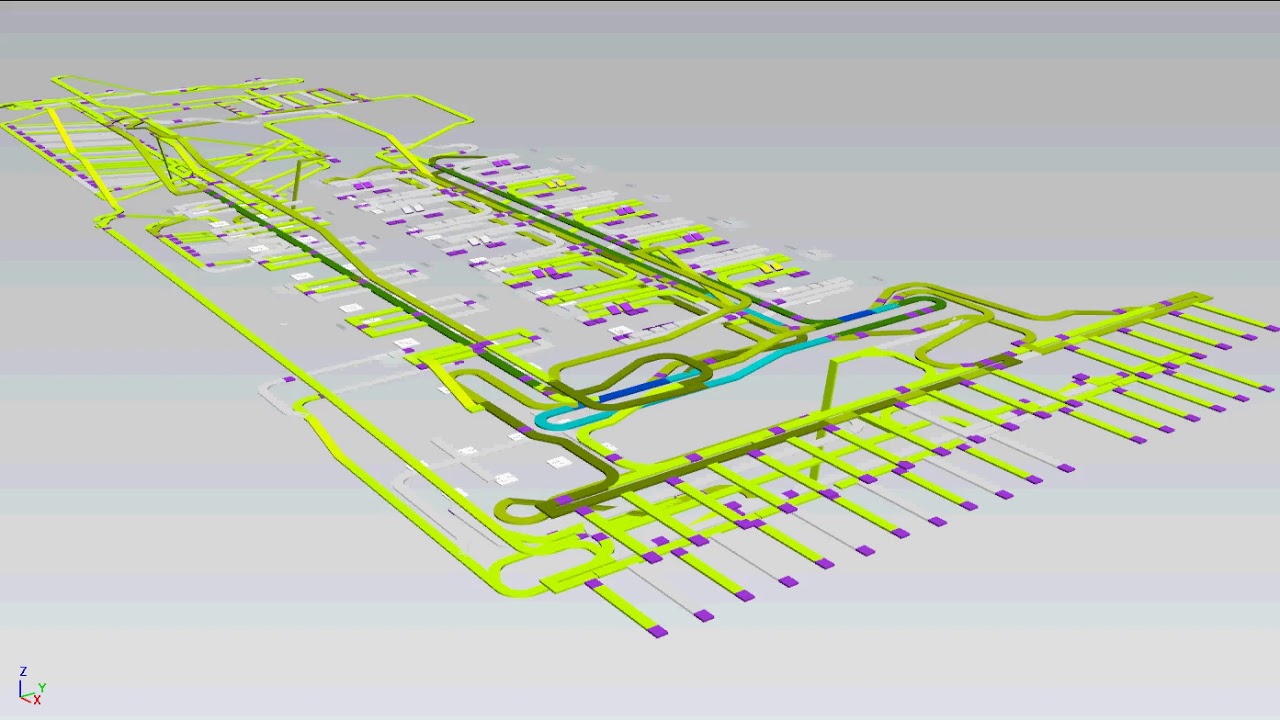
SimPlan expanded the existing SimPath model to include the new plant areas, as this was the only way to continue mapping the entire material flow seamlessly. The following areas and aspects were incorporated into the model:
- Shuttle lanes
- Picking stations
- Packing stations
- Dispatch area
- All relevant communication and reporting points within the plant
For the 3D modelling of the conveyor system, SimPlan utilised the SimPath library. This enabled the new conveyor sections to be integrated into the model quickly and with precision. The system also automatically imports its data, ensuring the model operates continuously with up-to-date values.
As part of the expansion, SimPlan also brought the model up to the latest technical standards and updated it to Plant Simulation version 15 and SimAssist 4.0. This enabled the new conveyor system to be seamlessly integrated, the new reporting points to be added, and the routing to be adjusted accordingly.
In addition to the model expansion, SimPlan conducted a workshop in which the team analysed the real-world plant using process mining, including pre- and post-processing. A refresher training session via WebEx, along with accompanying remote support, rounded off the project, ensuring that the team at Würth Elektronik eiSos can continue to use the updated model independently.
Results: Problems made visible and traceable
Using the expanded model, Würth Elektronik eiSos identified problems in the existing plant control system that had previously remained hidden within the raw numerical data. Colour-coded reports show the material flows for each section of the line on an hourly grid, allowing bottlenecks to be identified at a glance. This enables the project partners to pinpoint exactly where a problem arises and, building on this, develop appropriate solutions.
Plans for the future include a direct link between the model and the production system, as this would allow analyses to be carried out continuously and online, rather than just on an ad hoc basis.
SimPath: Keeping a constant eye on material flows
The project at Würth Elektronik eiSos demonstrates what SimPath was developed for. Unlike a traditional simulation for the redesign of a plant, SimPath supports a plant during ongoing operations, as the tool analyses real counting point data from existing systems and presents it clearly using Sankey diagrams, routing analyses and other reports.
SimPath is therefore particularly suitable for:
- material flow analysis in production and logistics systems
- the visualisation of complex transport and routing processes
- bottleneck and detour analyses
- comparisons between planning, simulation and real-world data
- process mining projects in highly automated plants
Because SimPath processes large volumes of data via SQLite in-memory databases, even extensive plants with numerous counting points can be analysed. This enables companies to identify more quickly where material flow can be optimised and to continue improving their processes step by step.
A growing system needs a model that grows with it
The project at Würth Elektronik eiSos clearly demonstrates that a simulation model does not have to be a one-off project. As a plant grows, the model should grow with it, as this is the only way to maintain transparency regarding the material flow. It is particularly in logistics systems with many plant areas and growing volumes of data that the importance of a tool which enables real operational data to be analysed on an ongoing basis – rather than merely providing a snapshot – becomes apparent.